
Custom Athletic Wear Manufacturing for Sports and Activewear Brands

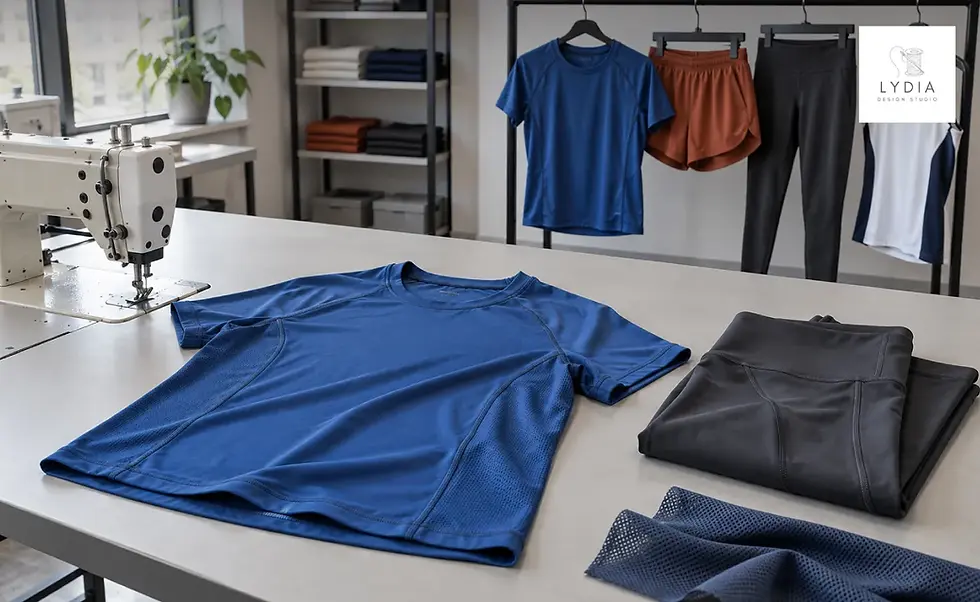
Customers expect more from athletic wear than good colors and an athletic-looking design. For instance, leggings need to stay opaque during movement, sports bras need dependable support, training tops should manage sweat without feeling heavy, and shorts need enough stretch to move without riding up or restricting the wearer.
Those expectations make custom athletic wear a more technical product category than ordinary casual clothing.
Fabric performance, stretch recovery, pattern engineering, seam placement, waistband construction, and fit all become part of the product — not just manufacturing details happening behind the scenes.
For new and growing brands, working with the right sportswear manufacturer can help address these decisions before expensive inventory is produced.
In this blog post, we'll explain how custom athletic wear manufacturing works, what separates strong activewear from average products, which fabrics and construction details matter, and what to look for when choosing a manufacturing partner.
Let's dive in!
What Is Custom Athletic Wear Manufacturing?
Custom athletic wear manufacturing means developing sports and activewear specifically around your brand rather than buying existing garments and simply adding a logo.
Depending on the product, brands can control:
Fabric composition and weight
Stretch and compression
Garment measurements
Waistband height and construction
Panels and seam placement
Necklines and armholes
Colors and prints
Labels and trims
Branding and packaging
This gives brands much more control over how the product fits, performs, and looks.
It is different from wholesale athletic apparel, where a business typically purchases ready-made products from an existing catalog. Wholesale can make sense for basic merchandise, but fully custom development is better suited to brands that want their own fit, fabric, construction, and recognizable product identity.
Key Points to Know About Athletic Wear Production

Start With the Activity Your Product Is Designed For
One of the most important decisions should happen before fabric sourcing or sampling: What will the customer actually do while wearing the garment?
Different activities create different product requirements. A yoga legging needs flexibility, coverage, and soft compression. Similarly, running shorts may prioritize lightweight feel, sweat management, and enough freedom for leg movement.
Before approaching any sports garment manufacturer, define:
Intended sport or activity
Workout intensity
Indoor or outdoor use
Climate
Desired compression
Intended fit
Customer price point
Expected frequency of wear
This gives both the designer and manufacturer a much clearer starting point.
Choose Performance Fabric for the Product, Not Just the Look
A fabric can look perfect in a swatch and perform poorly during a workout. That is why athletic fabric should be evaluated around movement and end use.
Popular options include:
Polyester-spandex: Durable, quick-drying, and versatile. Often used for leggings, training tops, shorts, jerseys, and general performance apparel.
Nylon-spandex: Common in premium leggings, sports bras, and fitted activewear where brands want strong stretch with a smooth, soft hand feel.
Performance polyester: Often used for running shirts, jerseys, uniforms, and training tops where quick drying and durability are priorities.
Mesh: Useful in ventilation zones, jersey panels, and areas where increased airflow is required.
Performance blends: Fibers can be combined to balance stretch, moisture management, softness, recovery, durability, and cost.
The percentage printed on a fabric label still does not tell the complete story. Two polyester-spandex fabrics with identical fiber percentages can have very different weights, compression, stretch directions, opacity, and recovery.
Stretch Isn't Enough; Recovery Matters Too
One of the most common fashion mistakes before production is focusing entirely on how far a fabric stretches. However, recovery is equally important.
Stretch describes how far the material extends. Recovery describes how well it returns to its original dimensions once the tension is removed.
Poor recovery can result in:
Baggy knees
Loose waistbands
Sagging seats
Stretched necklines
Loss of compression
Garments that become larger during wear
This becomes particularly important for leggings, sports bras, compression shorts, bodysuits, and fitted training apparel.
Brands should also check whether the fabric offers two-way or four-way stretch. Products involving movement in several directions generally benefit from multidirectional stretch, but actual requirements should be determined by garment design and activity.
Athletic Wear Patterns Need to Be Built Around Movement
You cannot always take a regular T-shirt or pair of leggings, sew it in performance fabric, and call it activewear.
The pattern has to accommodate movement.
For example, an athletic top may need additional mobility through the shoulders. Leggings need careful shaping through the waist, rise, seat, knees, and ankles. Shorts should allow stride without excess fabric bunching between the legs.
Depending on the design, a sportswear manufacturer may consider:
Gussets for increased mobility
Raglan or shaped sleeves
Contoured waistbands
Curved panel seams
Longer back hems
Compression zones
Strategic ventilation panels
Pocket placement that remains secure during movement
Fit testing should therefore include movement, not only standing measurements.
Have the wearer squat, bend, run, reach overhead, or perform movements relevant to the activity. A garment can look perfectly fitted when standing still and fail completely once the body starts moving.
Seam Construction Can Make or Break Activewear Comfort
Seams experience considerable tension in fitted athletic garments.
They also sit directly against the body, where bulky or poorly positioned stitching can cause discomfort during repeated movement.
The correct construction depends on the product and equipment available, but manufacturers may use stretch-compatible overlock seams, coverstitching, flat seams, or other constructions designed to move with the fabric.
When developing the garment, pay attention to:
Seam stretch
Stitch durability
Bulk against the skin
High-friction areas
Thread performance
Seam placement
Stress points
The strongest seam is the one that doesn’t create any discomfort or restrict stretch.
Don't Treat Every Activewear Product the Same

Good sportswear collections usually use different specifications for different product categories.
Leggings
Leggings need strong recovery, opacity, waistband stability, and enough stretch for lower-body movement. Fabric should be evaluated in a stretched position rather than only when relaxed.
Sports Jerseys
Jerseys often prioritize lightweight performance, ventilation, durability, and customization through sublimation, transfer printing, embroidery, or other decoration methods.
Sports Bras
Support level should match the intended activity. Fabric power, elastic quality, strap design, underband construction, cup coverage, and seam placement all affect performance.
Training Tops
Consider airflow, moisture management, arm movement, neckline stability, and whether the fit is loose, regular, or compression-based.
Athletic Shorts
Test rise, waistband security, stride, inseam length, pocket position, and inner-leg comfort. Running shorts and fitted cycling shorts require very different construction.
Build a Detailed Tech Pack Before Sampling
A manufacturer needs more than an inspiration image to reproduce your product accurately.
Your fashion tech pack should communicate the garment's technical requirements, including:
Front and back technical drawings
Fabric specifications
Stitching and seams
Waistband or elastic details
Panel construction
Colors
Print placements
Logos
Labels
Trims
Size range
A clear tech pack gives designers, patternmakers, sample makers, and production teams one reference point.
It also makes sample feedback more precise. Instead of saying a legging "feels wrong," you can compare the sample against defined measurements and construction requirements.
Sample and Wear-Test Before Bulk Production
Performance garments should be tested under conditions that resemble real use.
For leggings, perform squats and lunges. For running shorts, run in them. For sports bras, test the intended level of movement. Wash samples more than once to see how the fabric, elastic, seams, and prints respond.
Common aspects to review are:
Range of motion
Opacity under stretch
Fabric recovery
Compression
Waistband movement
Seam comfort
Pilling
Shrinkage
Colorfastness
Print durability
Overall fit after washing
Standardized testing can also be useful when brands make specific performance claims.
Custom Production vs. Wholesale Athletic Apparel

Both sourcing models have a place.
Wholesale athletic apparel can make sense when speed, low product-development involvement, or branded merchandise is the priority. The product already exists, which reduces development work but also limits control.
Custom sportswear manufacturing makes more sense when the brand wants proprietary fits, specific performance fabrics, custom panels, unique color combinations, private labels, original prints, a product competitors cannot source from the same catalog.
For brands trying to build long-term product recognition, those differences are very important.
What Activewear Startups Should Look for in a Manufacturer
Finding activewear manufacturers for startups involves more than searching for the lowest MOQ (Minimum Order Quantity).
A capable partner should understand stretch fabrics and technical construction while also supporting the development work required before production.
When comparing sportswear clothing manufacturers, ask about their experience with your product category, fabric sourcing, patternmaking, sampling, grading, printing, labeling, quality control, and small-batch production.
Also look at how they communicate during development. A manufacturer should be able to explain why a particular fabric, seam, or construction choice may or may not work rather than simply reproducing a reference garment.
For startups, smaller production runs can also reduce inventory exposure while the brand tests fit, sizing, pricing, and customer demand. Lydia Design Studio supports custom cut-and-sew activewear development, including tech packs, sampling, patternmaking, and small-batch production.
Final Thoughts
Strong athletic wear is developed around what happens when the customer actually starts moving.
The fabric needs to stretch and recover. The pattern needs to support the activity. Seams need to remain comfortable under tension, and waistbands, pockets, prints, and trims all need to survive real wear and repeated washing.
For sports and activewear brands, that means product development should come before bulk production.
Working with an experienced sportswear manufacturer can help connect fabric selection, fit, sampling, technical construction, and quality control so the finished collection performs as intentionally as it looks.


