.png)
Everything You Need to Know About Custom Sports Apparel Manufacturing

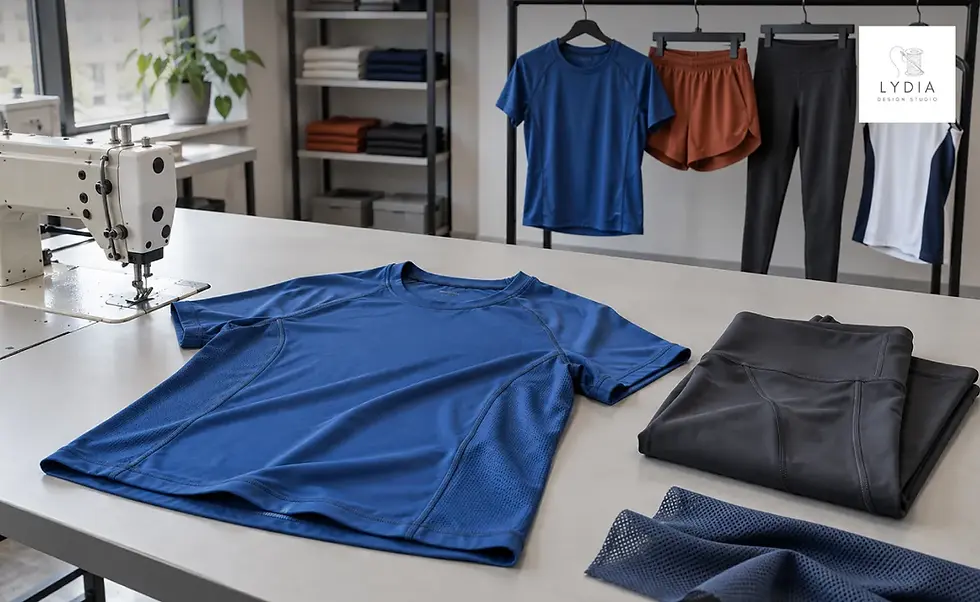
Custom sports apparel has to do more than carry a team logo or look good in product photos. Once athletes start running, stretching, sweating, or training, fabric performance, fit, stitching, and ventilation quality become much more noticeable.
That is where manufacturing and production decisions matter.
A basketball jersey, compression top, running shirt, soccer kit, and warm-up set should not all be developed using the same fabric or construction. Each sport places different demands on the garment, and those requirements should influence everything from material selection to pattern development.
For startup apparel brands, working with the right custom sportswear manufacturer can make these decisions easier before they become costly sampling or production issues.
In this blog post, we'll explain how custom sports apparel manufacturing works, which fabrics and customization methods to consider, how custom sports jerseys are developed, and what to look for in a manufacturing partner.
Let's dive in!
What Is Custom Sports Apparel Manufacturing?
Custom sports apparel manufacturing involves designing and producing athletic garments around the needs of a particular brand, team, sport, or customer.
Instead of simply purchasing blank jerseys and adding a logo, fully custom development can give brands greater control over:
Fabric type and fabric weight
Colors and prints
Fit and silhouette
Panels and ventilation
Necklines and sleeves
Labels and trims
Stitching and seam placement
Packaging and finishing
This distinction matters if you want your collection to feel like a developed sportswear line rather than standard promotional merchandise.
Key Considerations When Designing Custom Sports Apparel
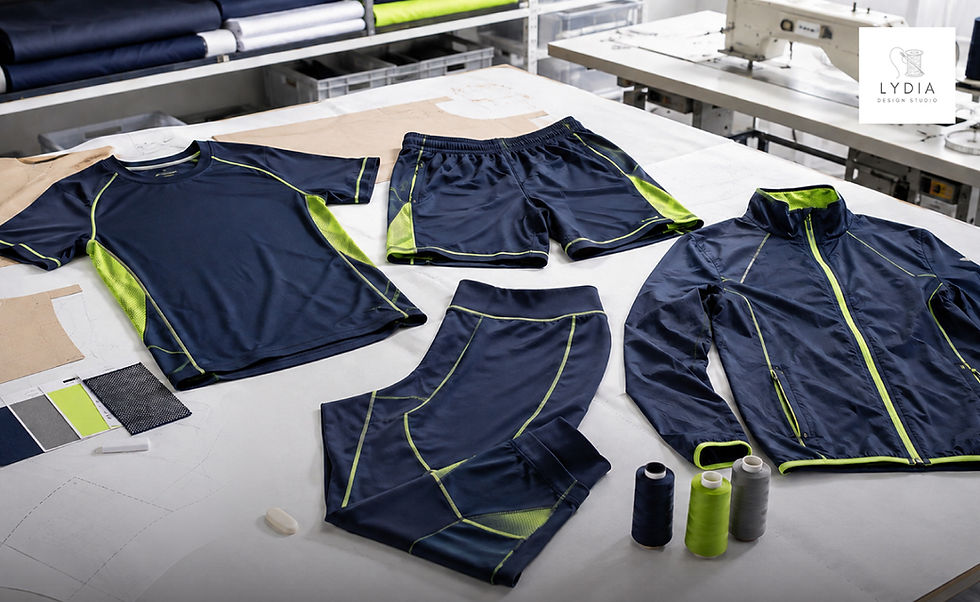
Below are some key tips to consider when designing or producing your custom sports apparel collection:
Start With the Sport, Not the Design
Before selecting colors or creating graphics, define how the garment will actually be used.
A good starting point is to ask:
What movements does the sport require? Running apparel may prioritize lightweight construction and moisture management. Yoga and training wear usually need greater stretch. Contact sports may require stronger fabrics and reinforced construction.
Where will it be worn? Outdoor teams may need different weight and coverage than athletes training indoors. Climate can also influence breathability, layering, and fabric selection.
How should it fit? Some sports need close-fitting garments to reduce excess material, while others use relaxed jerseys for mobility or layering.
These decisions give you and your manufacturer a much clearer direction before development begins.
Choose Performance Fabric Based on the Garment
One of the biggest mistakes in custom sports apparel is choosing fabric because it simply looks "athletic."
Performance fabrics vary considerably. The correct material should match the intensity, movement, fit, and environment of the activity.
Common options include:
Polyester: Commonly used for jerseys, training shirts, shorts, and team uniforms because it is durable and can be developed with moisture-management properties.
Polyester-spandex: Adds stretch and recovery, making it useful for fitted training tops, leggings, compression garments, and flexible uniforms.
Nylon-spandex: Often chosen when brands want a smoother hand feel with strong stretch, particularly for premium activewear.
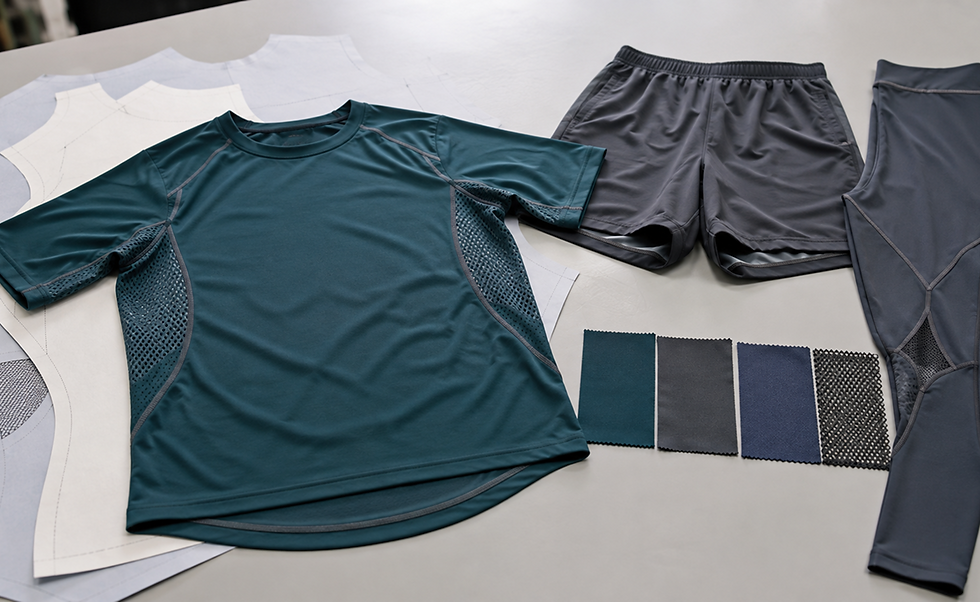
Mesh: Useful in ventilation panels or jerseys where additional airflow is needed.
Performance blends: Different fibers can be combined to balance stretch, softness, moisture control, durability, and cost.
Performance textiles are specifically developed around functions such as moisture management, stretch, durability, and comfort during movement.
Fit and Construction Matter Just as Much as Fabric
Good sportswear should support movement without creating unnecessary restriction or any irritation.
That means patterns need to be developed around the intended activity rather than copied from standard casual clothing.
For example, a custom sportswear manufacturer may need to consider:
Additional mobility through the shoulders
Stretch around the hips and knees
Longer or shaped hems for coverage
Raglan sleeves for certain athletic tops
Gussets for greater leg movement
Mesh panels for ventilation
Flat or stretch-compatible seams
Reinforcement in high-stress areas
Fit should also be tested while the wearer moves. Standing in front of a mirror does not reveal how a shirt rides up during overhead movement or how shorts behave during running and squatting.
How Are Custom Sports Jerseys Developed?

Custom sports jerseys are among the most recognizable categories in sports apparel, but producing a polished jersey requires more than just adding a team name and player number. Firstly, it is important to determine the sport and jersey silhouette. Soccer, basketball, baseball, cycling, and esports jerseys each have different expectations around sleeves, necklines, length, fit, and fabric.
Next comes the visual identity. Brands and teams can customize:
Garment colors
Logos and crests
Player names and numbers
Sponsor graphics
Side panels
Collar and cuff details
Repeating patterns
Custom labels
The placement and scale of these details should be established during design and sampling so artwork does not interfere with different seams, stretch zones, or other construction features.
Choose the Right Customization Method
The best decoration technique depends on the fabric, design complexity, quantity, and intended use.
A few common techniques include:
Sublimation Printing
Sublimation printing is particularly useful for polyester sportswear when brands want all-over designs, gradients, patterns, names, numbers, or multiple colors.
The dye is transferred into polyester using heat rather than sitting as a thick layer on top of the garment, which makes sublimation especially useful for performance apparel.
Screen Printing
Screen printing can work well for logos, team graphics, training tees, and sports merchandise. It is especially practical when producing larger quantities with a limited number of colors.
Heat Transfer
Heat transfers are commonly used for player names, numbers, logos, and smaller production runs. However, the transfer material needs to be compatible with the base fabric and the amount of stretch in the garment. Polyester decoration can also require attention to dye migration.
Embroidery
Embroidery can create a premium finish for logos and crests, particularly on jackets, polos, caps, and heavier teamwear. It may not be suitable for every lightweight or highly stretchy sports fabric because dense stitching can affect drape and flexibility.
Develop a Tech Pack Before Sampling
Once the design direction is clear, the manufacturer needs accurate production information. For that, a fashion tech pack is essential.
A sportswear tech pack may include:
Technical drawings
Fabric specifications
Measurements
Color references
Stitching details
Panel construction
Logo placements
Print dimensions
Labels and trims
Size range
Packaging instructions
The more detailed the specification, the easier it becomes to identify problems during sampling rather than discovering them in bulk production.
Always Sample Sportswear Before Bulk Production
Sampling is particularly important with performance garments because issues often appear only once the product is worn.
During sample review, check more than appearance. Put the garment through movements similar to its actual use. Run, stretch, bend, squat, or raise the arms depending on the product.
Then review:
Overall fit
Range of motion
Fabric recovery
Opacity when stretched
Seam comfort
Neckline and armhole fit
Waistband security
Print appearance
If the product claims specific moisture-management performance, standardized textile testing can also provide objective measurements rather than relying only on how the fabric feels. AATCC, for example, maintains test methods for evaluating liquid moisture management properties.
How Custom Sports Apparel Manufacturing Works
Although every project is different, the production process generally follows a clear sequence:
Define the product: Decide what you are producing, who will wear it, and how it needs to perform.
Create designs and specifications: Finalize silhouettes, colors, branding, and technical details.
Select fabrics and trims: Choose materials that support the required stretch, weight, comfort, and durability.
Develop patterns: Convert the design into production-ready garment patterns.
Create samples: Review fit, construction, graphics, and overall performance of the sample garment.
Make revisions: Before approval, adjust measurements, materials, or details if needed.
Grade the sizes: Expand the approved fit across the required size range.
Move into production: Cut, sew, decorate, finish, and assemble the garments.
Complete quality control: Check sizing, stitching, decoration, labels, and finishing before shipment.
Key point to consider: Brands should also plan labels correctly. In the U.S., most textile apparel must disclose fiber content, country of origin, and the identity of the manufacturer or responsible business, while care instructions are governed separately under the FTC's Care Labeling Rule.
How to Choose a Custom Sportswear Manufacturer

A good custom sportswear manufacturer should understand both apparel development and the performance requirements of athletic clothing. Sportswear often involves stretch fabrics, technical construction, custom graphics, and fit considerations that are different from standard casual apparel, so experience with this category matters.
Before partnering with a manufacturer, look at how much support they can provide throughout development and production. Ideally, they should assist with fabric sourcing, technical design, tech packs, patternmaking, sample development, custom printing, labels and branding, size grading, small-batch manufacturing, and quality control.
It is also worth asking how they approach fit testing, fabric performance, and production consistency. A manufacturer that understands how sportswear should move, stretch, recover, and hold up during repeated use is better positioned to identify issues before bulk production begins.
The right manufacturing partner should not simply follow instructions. They should help you make practical decisions around materials, construction, customization, and production so the final product is both visually strong and suitable for its intended activity.
Final Thoughts
When creating high-quality custom sports apparel, every decision — from fabric and fit to seams, printing, sizing, and testing — affects how the garment performs once the athlete starts moving.
The best approach is to define the sport and wearer first, then develop the fabric, fit, construction, and customization around those needs.
Moreover, working with an experienced custom sportswear manufacturer also gives brands a chance to identify fit and production problems during development instead of after inventory has already been produced. With careful planning and testing, custom sports apparel can look professional, perform consistently, and feel like a product developed specifically for the people wearing it.