
What Makes a High-Quality Pair of Jeans? Key Factors to Consider

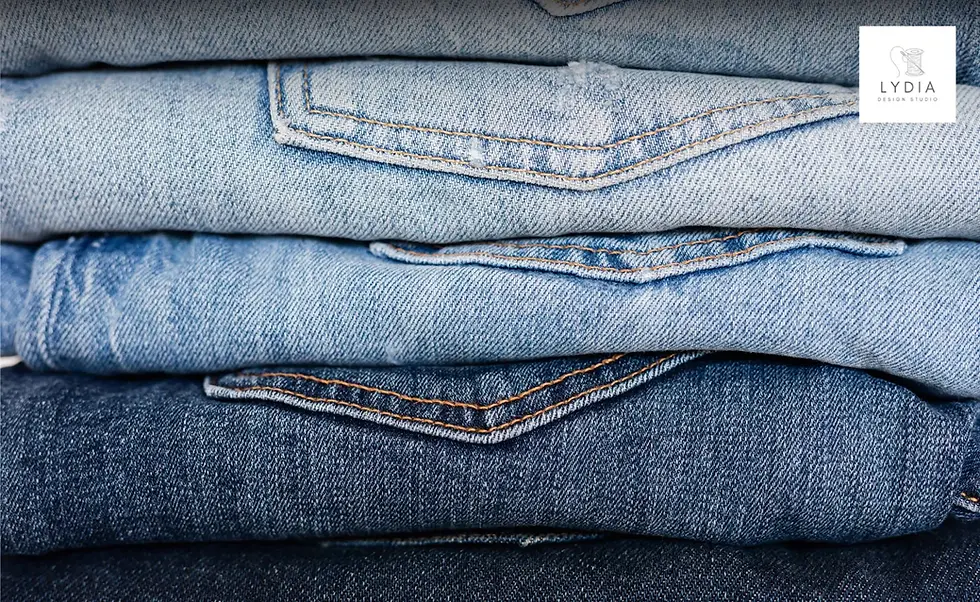
Two pairs of jeans can look almost identical on a hanger and look completely different after a few months of wear.
One may keep its shape, sit comfortably at the waist, fade attractively, and hold together at high-stress areas. The other may twist after washing, stretch out at the knees, develop loose seams, or lose the fit that made it appealing in the first place.
The difference is rarely one feature.
High-quality jeans come from a series of connected decisions involving denim selection, pattern development, stitching, hardware, wash treatment, fit testing, and quality control. Clothing brands need to make these decisions before bulk production, not correct them afterward.
In this guide, we’ll cover the factors brands should consider when designing jeans, how the manufacturing process affects quality, and what to review with a manufacturer before approving production.
1. Start With Denim That Matches the Design
Good jeans begin with the right denim, but “heavier” does not automatically mean “better.”
Denim is available in different weights, fiber blends, weaves, stretch levels, and finishes. CottonWorks notes that denim used for trousers and jeans commonly falls within the heavier portion of the denim weight range, although the right weight depends on the intended product.
A rigid straight-leg jean, for example, may benefit from sturdy 100% cotton denim that develops character through wear. A close-fitting skinny jean usually needs stretch and recovery. Relaxed summer jeans may require something lighter.
Before selecting fabric, a brand should consider:
Intended silhouette
Fabric weight
Cotton and synthetic fiber percentages
Stretch and recovery
Surface texture
Color and indigo depth
Expected wash treatment
Shrinkage
End use and season
This is especially important in custom jeans manufacturing, where the fabric should support the design instead of forcing the design to work around an unsuitable denim.
[Also Read: Exploring the Key Differences Between Denim vs Jeans]
2. Fit Is One of the Strongest Signs of Quality
Premium fabric cannot rescue a poorly developed fit.
Jeans need to work across several connected areas: waist, hip, rise, seat, thigh, knee, inseam, and hem. A small error in one area can change the balance of the whole garment.
When designing jeans, brands should first define the intended silhouette clearly. Is the fit slim, straight, relaxed, wide-leg, bootcut, flare, or oversized? “Loose fit” alone is not enough information for a patternmaker.
The rise also changes how the jean sits on the body, while the relationship between the hip, thigh, knee, and leg opening controls the final silhouette.
Stretch fabric adds another consideration. Stretch refers to how far a fabric extends under tension, while growth describes how much it remains extended after that tension is released.
A jean can therefore feel comfortable during a fitting but still perform badly if the knees, seat, or waistband grow noticeably after several hours of wear.
That is why brands should evaluate both initial fit and fit retention.
3. Pattern Development Matters More Than Many Startups Expect
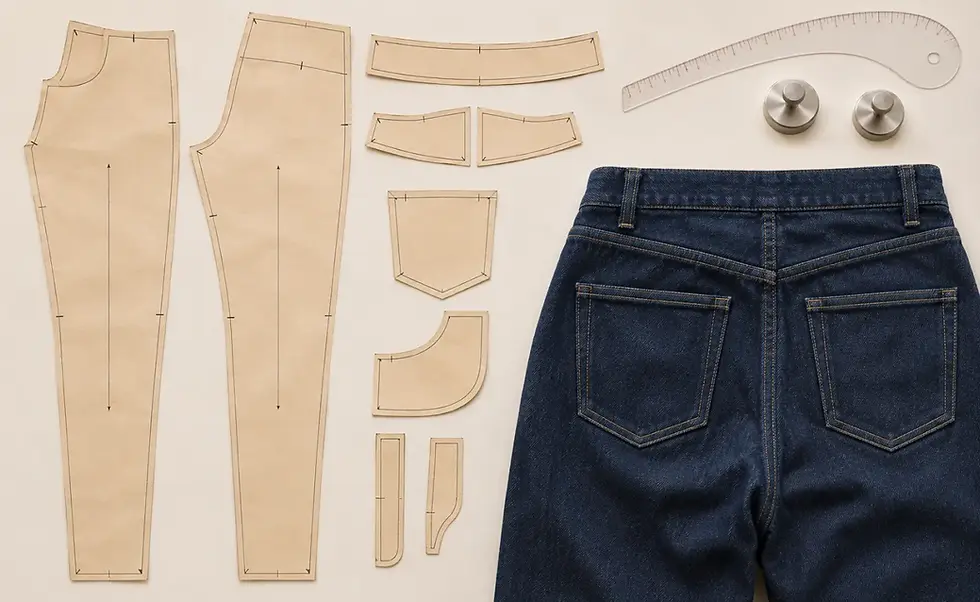
Jeans contain more engineering than their familiar appearance suggests.
A typical pair includes front and back leg panels, a yoke, waistband, belt loops, pockets, fly components, zipper or button closure, and reinforcement details.
All of these parts need to meet correctly.
Pocket position, for example, affects both function and appearance. Moving a back pocket slightly higher, lower, inward, or outward can noticeably change how the seat looks.
The yoke influences shaping around the back waist and hips. The waistband needs to follow the body without gaping, while the fly must lie flat.
For brands exploring new designs in jeans, decorative details should therefore be reviewed together with the underlying pattern rather than added at the end.
Once the base size is approved, grading must preserve the intended proportions across the size range. Lydia Design Studio's pattern-grading guide explains that pants require controlled adjustments at points such as the waist, hip, rise, thigh, knee, inseam, and hem rather than simple overall scaling.
4. Look Closely at Stitching and Reinforcement

A quality jean should not only look clean. Its construction should handle repeated movement and stress.
Areas such as pocket openings, belt loops, the fly, crotch, and side seams experience more strain than other parts of the garment. Depending on the design, manufacturers may use reinforced seams, multiple rows of stitching, bar tacks, or rivets where additional strength is needed.
CottonWorks specifically notes the use of bar tacking around jean components where extra reinforcement is required.
Brands should inspect:
Even stitch length
Straight topstitching
Secure backstitching or bar tacks
No skipped stitches
No loose thread ends
Smooth seams without excessive puckering
Consistent thread color
Symmetrical pockets and belt loops
Contrast topstitching can become an important visual feature, but it also makes sewing mistakes much easier to see.
A good jeans manufacturer should therefore treat decorative stitching and structural stitching as two parts of the same quality standard.
5. Hardware Should Match the Life of the Garment
Zippers, buttons and rivets may be small components, yet they strongly influence how customers judge a pair of jeans.
A premium-looking garment quickly feels cheap if the zipper catches, the button loosens, or rivets are poorly set.
Before production, brands should specify hardware in the bill of materials rather than leaving these decisions open to interpretation.
Check the:
Zipper type and length
Button size and finish
Rivet placement
Metal color
Branding or engraving
Pull strength
Compatibility with washing and finishing
Remember that hardware may go through the garment-washing process together with the jeans. A finish that looks good before washing may react differently after abrasion or chemical treatment.
6. The Wash Can Change More Than the Color

The wash stage is one of the most important parts of the jeans manufacturing process because it can change color, softness, surface character, shrinkage, and overall appearance.
Depending on the product, denim finishing may include enzyme washing, abrasion, whiskering, hand sanding, resin treatments, or other processes used to create a particular worn effect.
This means the manufacturer should not perfect the fit on untreated denim and assume the garment will behave identically after washing.
Wash development should be part of sampling.
A brand should approve the target:
Shade
Fade placement
Hand feel
Whiskering
Distressing level
Seam appearance
Shrinkage
Two batches should also look reasonably consistent. Intentional fading is different from uncontrolled variation.
7. Shrinkage and Leg Twist Need to Be Tested
One overlooked quality issue is dimensional change after laundering.
Fabric can shrink or grow, while skew can cause parts of the garment to twist. CottonWorks explains that dimensional change can affect fit, seam appearance, and the relationship between the main fabric and garment components. Skewness can cause legs and seams to shift after washing.
For jeans, that may show up as:
Shorter inseams
Tighter waist or hips
Twisted side seams
Changed rise
Uneven hems
Waistband distortion
Brands should test the actual denim and intended wash process before locking final measurements.
This is particularly important with stretch denim, because elastane-containing fabrics can respond differently to heat and finishing conditions.
8. Quality Control Has to Continue Into Bulk Production
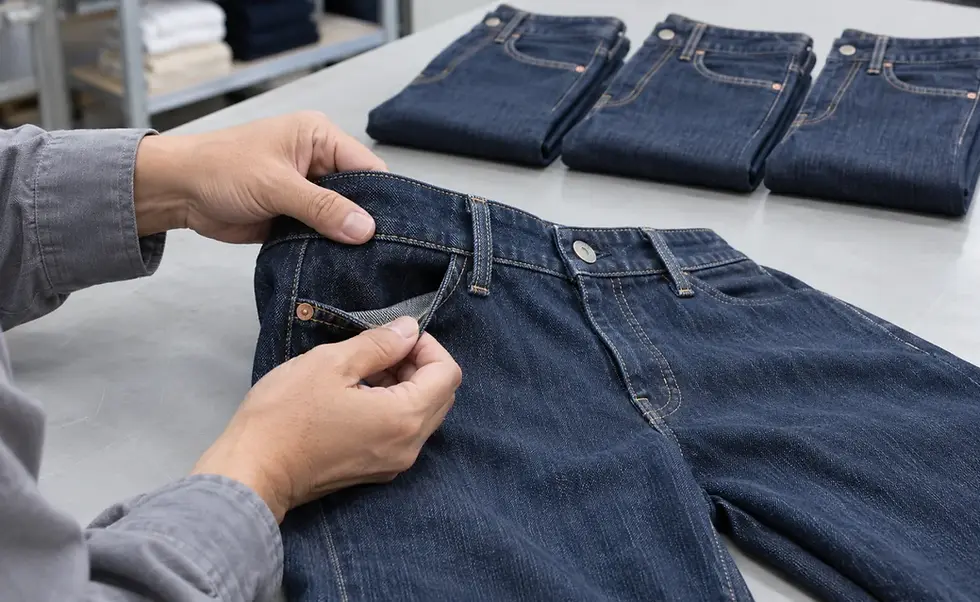
Approving one excellent sample does not guarantee that every production unit will match it.
Garment quality control should evaluate fabric, measurements, fit, seams, construction, and finished-product performance.
For jeans, bulk inspections may include checking:
Measurements against tolerance
Wash and shade consistency
Pocket alignment
Stitch quality
Hardware attachment
Seam strength
Fabric defects
Leg symmetry
Labels and trims
Overall finishing
The goal is consistency. Customers buying the same style and size should not receive noticeably different garments.
9. Sampling Should Test the Product, Not Just the Appearance
A sample is not simply a smaller production order. It is where the brand should find problems.
Wear the jeans. Sit in them. Walk. Check pocket access. Watch whether the waistband gaps. See whether the knees recover after bending. Wash the sample according to the proposed care instructions and measure it again.
The approved sample should also match the production specifications in the tech pack, including fabric, measurements, stitching, hardware, wash, labels, and finishing details.
For a brand searching for a jeans manufacturer for startups, this development support can matter as much as the factory's ability to sew the garment.
Final Thoughts
The quality of a pair of jeans is built long before the final button is attached. Fabric weight and stretch need to suit the silhouette. Patterns must balance fit and movement. Seams and stress points need the right construction.
Hardware needs to survive wear and finishing, while the wash process must deliver the intended appearance without creating avoidable fit or quality problems.
For clothing brands, working with the right jeans manufacturer means treating all of those decisions as one connected development process.
Lydia Design Studio supports brands with apparel design, pattern development, sampling, grading, and cut-and-sew production. LDS also offers custom jeans as part of its manufacturing capabilities, including multiple jean fits and styles.


