.png)
How to Choose Baby Clothing Manufacturers for Startups: A Practical Guide

Updated: Mar 4

Most new founders believe that the hardest part of launching a babywear brand is coming up with the perfect design. The prints, the colors, the branding; that’s where the excitement is. But in reality, manufacturing is where brands quietly succeed or fail.
In babywear, the stakes are even higher. You’re creating products for newborns and toddlers with sensitive skin, which means safety, compliance, and fabric quality are essential.
More importantly, selecting the wrong manufacturing partner can lead to production delays, stitching defects, failed compliance tests, costly returns, and damaged trust with customers. And in this industry, trust is everything.
That’s why choosing the right baby clothing manufacturers for startups is one of the most important decisions you’ll make.
If you’re aiming to start your baby clothing line and don’t know where to begin, this one’s for you. In this blog post, you’ll learn how to:
Understand what startup-friendly baby clothing manufacturers should actually offer
Evaluate pricing, minimum order quantities (MOQs), certifications, and production capabilities
Identify the best baby clothing manufacturers for your brand’s current stage
Let’s start by understanding how baby clothing manufacturing really works, and what you should expect.
What Do Baby Clothing Manufacturers Actually Do?
A reliable manufacturer supports you across multiple stages of production. These include:
Pattern Making
Everything starts with technical patterns. Whether you’re creating custom designs or adapting existing templates, accurate pattern making ensures proper sizing, comfort, and consistency across production runs, which is critical for baby garments.
Fabric Sourcing
Manufacturers often help source fabrics such as organic cotton, bamboo blends, or hypoallergenic materials. For brands focused on ethical baby clothing production, fabric sourcing also includes verifying certifications and supply chain transparency.
Sampling & Product Development
Before bulk production, you’ll receive samples. This is where fit, stitching, snap placement, softness, and durability are tested. In custom baby clothing manufacturing, this phase may involve multiple revisions to get everything right.
Bulk Production
Once samples are approved, the manufacturer moves to full-scale production. This stage includes cutting, stitching, finishing, and quality control checks. Some factories specialize in OEM (Original Equipment Manufacturer) baby clothing, meaning they produce garments based on your brand’s specific designs and features.
Labeling & Packaging
Many manufacturers offer additional services such as adding custom labels, size tags, care instructions, barcodes, and branded packaging. If you’re building a private label baby clothing brand, this step is especially important for brand identity.
Compliance Testing & Quality Assurance
Baby clothing brands need to comply with strict safety regulations in numerous countries. Reputable manufacturers conduct or facilitate compliance testing for things like fabric safety, flammability, and choking hazards. This step protects both your customers and your brand.
Understanding these responsibilities helps you evaluate manufacturers more intelligently and ensures you choose a partner who supports your startup beyond just production.
What to Look for in Baby Clothing Manufacturers for Startups
Not every apparel manufacturer deals with new brands. Many are structured for high-volume clients and large orders. That’s why choosing the right baby clothing manufacturers for startups requires looking beyond basics.
Startup-friendly manufacturers typically offer:
Low MOQs (Minimum Order Quantities) so you can test products without heavy inventory risk
Flexible sampling with room for revisions and improvements
Development support, including help with sizing, tech packs, and costing
Fabric guidance, especially around softness, safety, and durability
Transparent communication with clear timelines and pricing
A genuine willingness to educate new founders
The best partners don’t just produce your garments, they help you grow your brand responsibly and sustainably.
How to Choose the Best Baby Clothing Manufacturers (Step-by-Step)
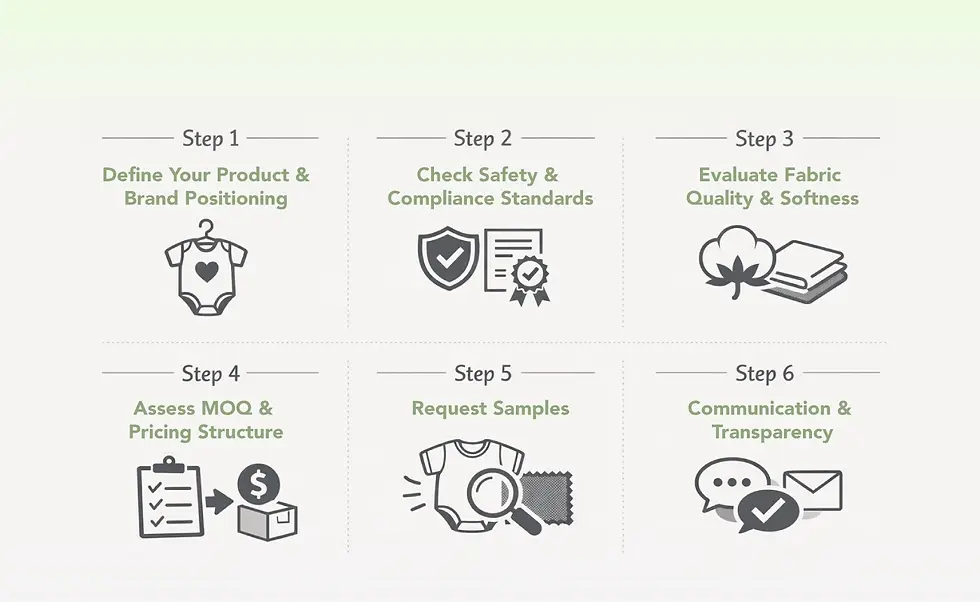
Finding the best baby clothing manufacturers is all about clarity, alignment, and asking the right questions at each stage.
Here’s how to approach it strategically:
Step 1: Define Your Product & Brand Positioning
Before reaching out to any manufacturer, define exactly what kind of babywear brand you’re building. Are you focusing on organic babywear, budget-friendly essentials, a premium boutique line, gender-neutral basics, or seasonal drops?
Your positioning influences fabric choices, pricing expectations, MOQs, and the type of factory you should approach. Without this clarity, it’s difficult to find the right manufacturing partner for your niche.
Step 2: Check Safety & Compliance Standards (Critical in Babywear)
In babywear, compliance is foundational. Before shortlisting any manufacturer, confirm they understand and follow the safety regulations required in your target market. For instance, CPSIA (Consumer Product Safety Improvement Act) standards cover lead content and product safety.
Certifications like OEKO-TEX ensure textiles are tested for harmful substances, while GOTS certification is essential if you’re positioning your brand as organic.
A trustworthy manufacturer will be transparent about testing procedures and provide documentation when requested. This step protects not only your customers but also your brand’s credibility and legal safety.
Step 3: Evaluate Fabric Quality & Softness
Fabric is everything in babywear. Babies have sensitive skin, which means materials must be soft, breathable, and safe for prolonged contact. Look for high-quality breathable cotton, hypoallergenic fabrics, and stitching that can handle frequent washing without irritation.
Shrink resistance is another key factor, since baby clothes are washed often. This is why fabric testing is essential. Wash tests, stretch tests, and wear trials help you confirm that the garment maintains its shape, softness, and safety after multiple washes.
Step 4: Assess MOQ & Pricing Structure
Before moving forward, clarify the minimum order quantity (MOQ) per style, color, and size. As a startup, lower MOQs reduce risk and allow you to test demand. Ask whether the manufacturer can scale as your orders grow and how pricing changes with reorders.
Additionally, consider the costs associated with sampling and development. Set realistic pricing expectations for startups; high-quality, compliant babywear will not be the cheapest option, and extremely low quotes often indicate compromises.
Step 5: Request Samples (And What to Look For)
Before placing a bulk order, thoroughly review the samples. Sampling is where you catch problems early before they become expensive mistakes.
Check the stitching quality. The seams should be clean, secure, and free of loose threads. Test the elastic durability in waistbands and cuffs to ensure it stretches and recovers properly. Also, inspect snaps and buttons to confirm they’re firmly attached and safe.
Run a simple wash test to check for shrinkage, fading, or fabric damage. Lastly, review fit consistency to ensure sizing matches your chart and feels comfortable.
Step 6: Communication & Transparency
Evaluate how quickly and clearly the manufacturer communicates. Consistent response time and a willingness to explain their process are strong signs of reliability.
Ensure timelines for sampling, production, and delivery are clearly defined. Contracts and payment terms should be transparent, with no vague pricing or unclear milestones. Clear communication prevents costly surprises later.
Where to Find Reliable Baby Apparel Manufacturers
Once you know what you’re looking for, the next step is knowing where to look. Finding the right baby clothing manufacturers is about identifying credible partners and narrowing your options thoughtfully.
Start With Verified B2B Platforms
B2B platforms can be a practical starting point, especially for founders searching for baby clothing manufacturers for startups. Marketplaces allow you to filter suppliers by product type, certifications, minimum order quantities, and production capacity.
The key is to go beyond surface-level listings. Review factory profiles in detail. Look for export history, compliance certifications, factory photos, and clear communication signals. Use specific search terms like “organic babywear manufacturer” or “low MOQ baby clothing factory” to avoid irrelevant results. These platforms are useful for building an initial list.
Explore Industry Networks and Trade Events
Established manufacturers often participate in textile trade events and are affiliated with recognized industry groups. These spaces tend to attract more experienced suppliers who are serious about long-term business.
Trade shows allow you to see fabric quality, stitching, and finishing up close. Even if you can’t attend in person, exhibitor lists and association directories can help you discover vetted suppliers. Manufacturers active in industry networks are often more structured and quality-focused.
Tap Into Founder Communities and Direct Referrals
Sometimes the best leads don’t come from search engines — they come from conversations. Connect with other children’s apparel founders through LinkedIn groups, fashion business communities, or startup networks.
Ask direct questions about their experiences: Was communication smooth? Were timelines met? Did bulk quality match samples? Honest feedback from other brand owners can help you avoid unreliable factories and narrow down serious contenders faster.
Instead of contacting dozens of suppliers, narrow your list to three to five strong candidates. From there, move into sampling, compliance verification, and pricing discussions.
The goal isn’t to find the cheapest option quickly — it’s to find a manufacturing partner that aligns with your standards, budget, and long-term growth plans.
Startup Cost Breakdown for Baby Clothing Brands

Understanding your cost structure early helps you price confidently and protect your margins.
Here’s what you should consider:
Fabric cost is usually the largest expense, especially if you’re using organic cotton or certified materials. Higher-quality fabrics increase cost but also justify premium pricing.
Labor cost depends on the country of production and garment complexity. Babywear often requires careful stitching and quality checks, which affect pricing.
Sampling cost includes prototype development and revisions. Startups should budget for multiple sample rounds before bulk production.
Labeling & packaging covers custom tags, care labels, size labels, and branded packaging — small details that impact brand perception.
Freight & customs can significantly affect landed cost, especially with overseas production. Always calculate shipping, duties, and taxes upfront.
Local vs Overseas Baby Clothing Manufacturers: Pros & Cons
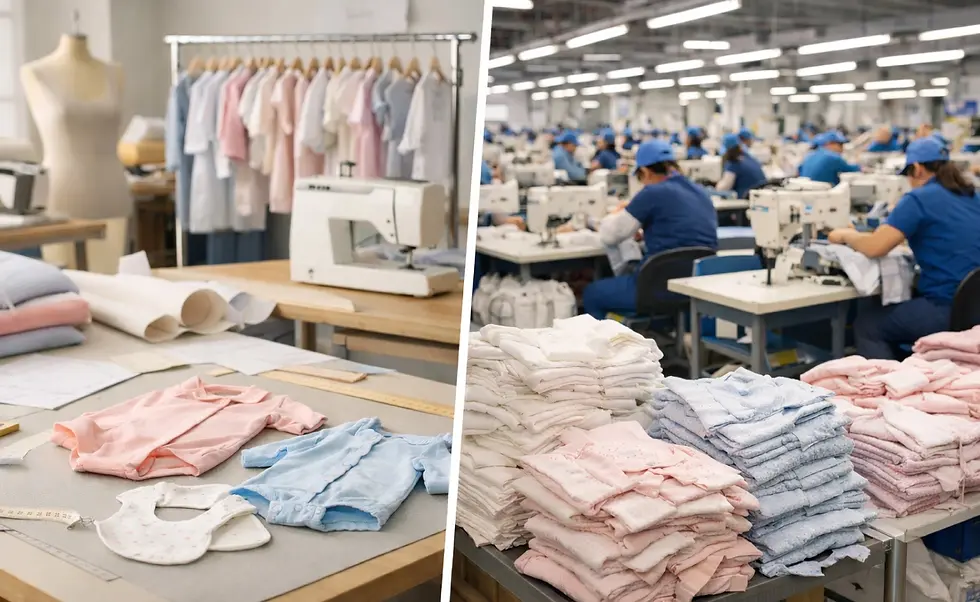
Choosing between domestic and overseas baby clothing manufacturers is a strategic decision that affects your pricing, timelines, communication, and long-term scalability.
There’s no universally “right” option, so the best choice depends on your budget, growth stage, product complexity, and how much control you want over production.
Local Baby Clothing Manufacturers
Local baby clothing manufacturers typically come with higher production costs, but they offer several advantages for startups. Lower MOQs make it easier to test new designs without heavy inventory risk. Shipping is faster, which improves cash flow and shortens launch cycles.
Communication is often smoother due to time zone alignment and fewer language barriers. For early-stage brands that value flexibility and close collaboration, domestic production can reduce operational stress, even if per-unit costs are higher.
Overseas Baby Clothing Manufacturers
Overseas manufacturers generally offer lower per-unit costs, which can significantly improve margins at scale. However, they often require larger MOQs, making them better suited for brands with validated demand.
Lead times are longer due to production schedules and international shipping. Communication may also require more structure and clarity. For startups ready to scale and manage longer timelines, overseas production can offer strong profitability as long as compliance, quality control, and logistics are carefully managed.
Conclusion
At the end of the day, your manufacturer is a part of your brand’s foundation. The quality of your stitching, the softness of your fabrics, the consistency of your sizing — all of it reflects the partner you choose behind the scenes.
In babywear, there’s no room for shortcuts. Parents care about safety, comfort, and reliability. That means your manufacturing decisions directly impact customer trust and long-term loyalty. One strong production partner can support your growth for years, and the wrong one can slow it down.
So, start small, test samples carefully, and validate quality before placing larger orders. Once you’re confident in consistency and communication, scale strategically.
FAQs
How do I find baby clothing manufacturers for startups?
Start by searching specifically for baby clothing manufacturers for startups or low-MOQ babywear suppliers. Use platforms like trade directories and industry expos. Request samples, ask about compliance experience, and confirm they regularly produce babywear.
What is the minimum order for baby clothing manufacturers?
MOQs vary widely. Small or startup-friendly manufacturers may accept 50–200 pieces per style, while larger factories often require 500+ units. Always clarify MOQ per size and per color before committing.
Are overseas baby clothing manufacturers reliable?
Yes, if they meet the required safety and compliance standards. Many reputable overseas factories produce high-quality babywear. The key is verifying certifications and conducting proper quality checks before bulk production.
Which material is best for baby clothes?
Soft, breathable, and hypoallergenic fabrics work best. Organic cotton is a popular choice due to its safety and comfort. Bamboo blends and certified cotton fabrics are also commonly used in high-quality babywear.
How do I know if I’ve found the best baby clothing manufacturers?
The best baby clothing manufacturers combine quality, transparency, reasonable MOQs, and clear communication. Strong proper documentation and consistent timelines are also good indicators that you’ve found the right partner.
Is selling baby clothes profitable?
Yes, babywear can be profitable due to repeat purchases and growing demand. However, success depends on quality, brand positioning, pricing strategy, and choosing the right baby clothing manufacturers from the start.


