.png)
How to Choose the Right Fabrics for Your Clothing Collection


Many new clothing brands spend weeks refining sketches, colors, and branding, but fabric is what turns a design into a real product. It affects how the garment feels, fits, moves, washes, and lasts.
The wrong fabric can make a strong design shrink, sag, feel cheap, or lose shape after a few wears. It can also delay sampling, increase costs, and create production issues that could have been avoided earlier.
That’s why fabric selection should never be a last-minute decision. With careful planning and expert advice, brands can select materials that enhance the design, fulfill customer expectations, and streamline production.
In today’s blog post, we’ll look at how product type, customer expectations, fabric behavior, testing, cost, and manufacturer support all shape smarter fabric decisions.
Let’s dive in!
The First Step in Smart Fabric Selection
Fabric selection should always start with the product’s purpose. Instead of choosing a material just because it looks nice, brands should first ask what the garment needs to do.
Define the Garment Category
Every product category has different fabric needs. T-shirts need softness, breathability, and shape retention. Activewear needs stretch, moisture control, and recovery. Dresses need drape, movement, and comfort. Pants need structure, durability, and fit stability, while outerwear needs weight, insulation, and weather resistance.
Understand the Customer’s Expectations
Your fabric should also match the customer you’re designing for. A budget-friendly everyday piece will need a different fabric approach than a premium occasionwear item. Comfort-first products may require soft, flexible materials, while structured fashion pieces need fabrics that hold shape. Seasonality also matters because summer, winter, and transitional collections all require different fabric performance.
Match Fabric to Product Use
The same fabric will not work for every design. A lightweight fabric that works beautifully for a flowy blouse may not have enough structure for pants or enough recovery for fitted activewear. The best fabric choice supports the garment’s use, customer expectations, and production requirements.
Fabric Fundamentals Every Clothing Brand Should Know

Before choosing a fabric, brands should understand a few basic fabric details. These factors affect how the garment feels, fits, moves, and performs after production.
Fiber Type
Cotton: Soft, breathable, and comfortable for everyday clothing.
Linen: Lightweight, breathable, and ideal for warm-weather pieces, but wrinkles easily.
Wool: Warm, durable, and commonly used for coats, suits, and structured garments.
Polyester: Strong, affordable, wrinkle-resistant, and often used in performance or blended fabrics.
Nylon: Lightweight, durable, and commonly used in activewear, outerwear, and swimwear.
Rayon/Viscose: Soft with good drape, often used for dresses, blouses, and flowy garments.
Spandex/Elastane: Adds stretch and flexibility, usually blended with other fibers.
Woven vs Knit Fabrics
Woven fabrics are usually more structured and stable.
Knit fabrics usually offer more stretch, comfort, and movement.
Fabric Weight
Lightweight fabrics work well for summer clothing, layering pieces, and flowy garments.
Medium-weight fabrics are suitable for everyday wear like T-shirts, dresses, shirts, and casual bottoms.
Heavyweight fabrics are better for jackets, pants, outerwear, and structured garments.
Drape and Hand Feel
Drape affects how the fabric falls, flows, or holds shape on the body.
Hand feel refers to how the fabric feels when touched or worn.
Both influence whether a garment feels premium, comfortable, stiff, soft, casual, or structured.
Stretch and Recovery
Stretch affects comfort, movement, and fit.
Recovery shows how well the fabric returns to its original shape after stretching.
This is especially important for activewear, fitted tops, leggings, pants, and bodycon-style dresses.
Choosing Fabric Based on Clothing Category

Different garments need different fabric performance. The right choice depends on how the product should feel, fit, move, and hold up after wear.
Best Fabrics for T-Shirts
T-shirts usually need fabrics that feel soft, breathable, and easy to wear. Good options include cotton jersey, cotton-poly blends, bamboo blends, and lightweight performance knits.
The focus is on breathability, softness, shrinkage control, and cost.
Best Fabrics for Activewear
Activewear needs fabric that supports movement and keeps its shape. Polyester-spandex, nylon-spandex, performance blends, and moisture-wicking fabrics are common choices.
The focus is on stretch, recovery, sweat management, and durability.
Best Fabrics for Dresses and Blouses
Dresses and blouses often need fabrics with movement, softness, and good drape. Rayon, viscose, polyester crepe, satin, silk, chiffon, and cotton voile are popular options.
The focus is on drape, movement, opacity, and comfort.
Best Fabrics for Pants and Bottomwear
Pants need fabrics that offer structure, stability, and long-term wear. Cotton twill, denim, ponte knit, wool blends, and stretch-woven fabrics work well for different styles of bottomwear.
The focus is on structure, fit, retention, durability, and wrinkle resistance.
Best Fabrics for Jackets and Outerwear
Jackets and outerwear need fabrics that can handle weight, layering, and construction. Denim, canvas, polyester woven, wool blends, fleece, and technical fabrics are strong options.
The focus is on fabric weight, lining compatibility, weather resistance, and construction strength.
How Fabric Impacts Fit, Cost, and Production
Fabric choice directly affects the clothing manufacturing process. The wrong fabric can change the fit, increase costs, slow down sampling, and create issues during apparel production.
Fabric and Fit
Fabric changes how a garment sits on the body. Stretchy, stiff, lightweight, and heavy fabrics all behave differently during fitting and garment sampling.
Fabric and Production Cost
Fabric affects production cost in several ways, including:
Fabric cost per yard
Cutting difficulty
Sewing complexity
Waste percentage
Shrinkage allowance
Reorder availability
Even a small fabric change can affect the final price, especially when producing at scale.
Fabric and Sampling
Fabric should be finalized before serious fit approvals. A sample made in one fabric may fit, drape, or stretch differently when produced in another fabric, which can lead to extra revisions and delays.
Key Fabric Tests Brands Should Never Skip
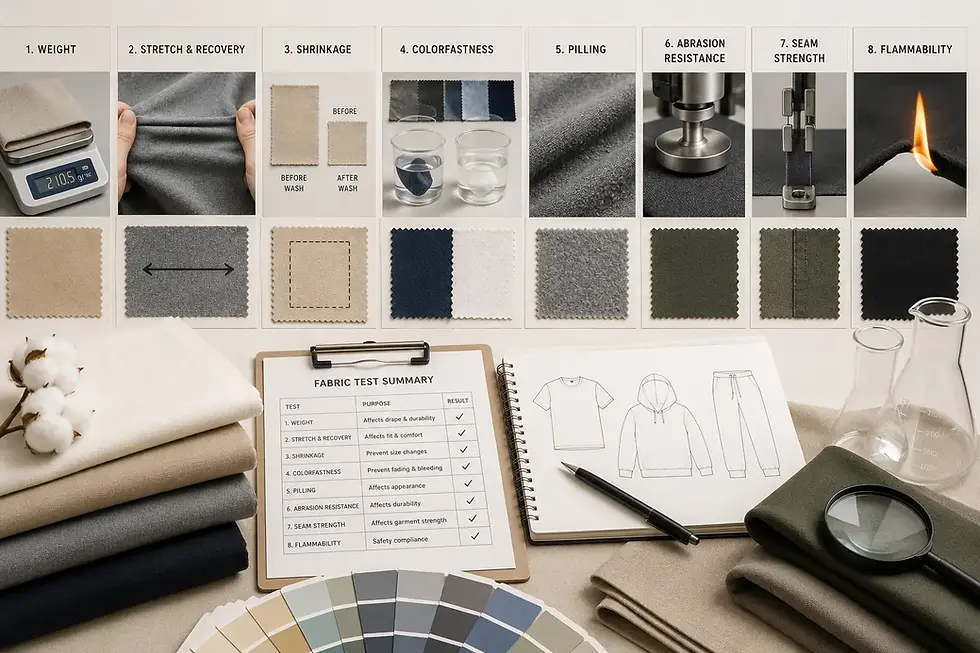
Fabric testing helps brands catch quality issues before bulk production.
These tests are especially important because some fabric problems only show up after washing, wearing, stretching, or repeated use.
Shrinkage Testing
Shrinkage testing shows how much a fabric changes after washing and drying. This matters because even a small amount of shrinkage can affect sizing, fit, and customer satisfaction. Testing before bulk production helps brands adjust patterns, measurements, or fabric choices early.
Colorfastness Testing
Colorfastness testing checks whether fabric color fades, bleeds, or transfers onto other materials. This is important for dark colors, printed fabrics, and contrast trims. Poor colorfastness can make a garment look worn out quickly or damage other clothing during washing.
Stretch Recovery Testing
Stretch recovery testing shows whether a fabric returns to its original shape after being stretched. This is especially important for leggings, activewear, fitted tops, and stretch pants. If the fabric stretches out too easily, the garment may lose its fit after a few wears.
Pilling Resistance
Pilling resistance testing checks how likely a fabric is to develop small fiber balls on the surface. Pilling can make a garment look old, cheap, or poorly made, even if the construction is strong. For everyday wear, this test is important for protecting the product’s perceived quality.
Wash Durability
Wash durability testing shows how the fabric performs after repeated washing. It helps brands check shrinkage, fading, softness, twisting, and overall fabric condition. Fabrics should be tested the way customers will actually use them, not just how they look before production.
How Expert Manufacturers Help With Fabric Selection
Choosing fabric can feel overwhelming for new brands because one material decision can affect design, cost, fit, sampling, and final product quality. This is where fabric selection guidance by expert manufacturers can make the process much easier.
Experienced manufacturers do more than produce the garment. They help brands choose fabrics that actually work for the product, customer, and production process.
Here’s how we can help:
Recommending fabrics based on garment type: We guide brands toward materials suited to T-shirts, activewear, dresses, pants, outerwear, and specialty garments.
Explaining fabric behavior: We help brands understand GSM (Grams per Square Meter), stretch, drape, durability, shrinkage, and hand feel in practical terms.
Identifying risks before sampling: We spot issues such as poor recovery, weak structure, difficult sewing, or fabric that may not hold the intended shape.
Suggesting better options within budget: If one fabric is too expensive or difficult to source, we can recommend alternatives that still support the design.
Helping avoid production delays: The right fabric guidance reduces extra revisions, sourcing problems, and last-minute changes.
Connecting fabric choices to manufacturing needs: We make sure the fabric works with cutting, sewing, trims, finishing, and quality control.
Why Local Manufacturing Support Can Improve Fabric Decisions
Working with local or regional manufacturing partners can make fabric selection easier because communication is faster and sample reviews are more hands-on.
For startups and emerging brands, working with expert Atlanta clothing manufacturers can be especially helpful when fabric choices, sampling, and production planning need closer attention.
Final Thoughts
Fabric selection is not just about color, texture, or appearance. It affects comfort, fit, quality, pricing, production, and how customers feel when they wear the final product.
The best collections are built with fabrics that match the design, customer expectations, season, and manufacturing process. When fabric decisions are made carefully, brands can avoid unnecessary sampling issues, production delays, and quality problems.


