.png)
What Is Spandex Fabric: Properties, Benefits, and Uses in the Apparel Industry

Updated: Aug 11

Spandex is used in more clothing than most people realize. It gives jeans a little extra flexibility, helps leggings maintain their shape, and allows fitted dresses, sports bras, swimwear, and uniforms to move comfortably with the body.
But adding spandex does not automatically make a fabric better.
The percentage of spandex, the main fiber it is blended with, the fabric construction, weight, stretch direction, and recovery all affect how the final garment performs. Two fabrics can contain the same percentage of spandex and still feel completely different.
That is why clothing brands need to look beyond the fiber content label when selecting the right stretch material for their apparel collections.
In this blog post, we’ll cover what spandex is, what spandex is made of, its main properties, popular spandex fabric blends, common apparel uses, and what brands should test before moving into production.
Let’s dive in!
What Is Spandex?
Spandex is a synthetic fiber known for its high elasticity. It can stretch considerably and return toward its original shape after the tension is removed. Spandex is also known as elastane. The two terms refer to the same general type of fiber, and both frequently appear on clothing labels.
You may also see LYCRA® mentioned when discussing stretch fabrics. LYCRA® is a branded spandex fiber, not the generic name for every type of spandex material.
What Is Spandex Made Of?
Spandex is made from segmented polyurethane, a synthetic polymer designed to provide both flexibility and recovery.
The polymer contains softer sections that allow the fiber to stretch and harder sections that help pull it back toward its original length. This structure is what gives spandex its elastic performance.
For clothing brands, the chemistry is less important than the result: spandex helps a fabric stretch without permanently changing shape after every movement.
The fiber is usually produced as very fine filaments and then combined with materials such as cotton, polyester, nylon, rayon, or denim yarns. Spandex is rarely used by itself because it does not provide all the qualities needed in a finished garment.
Instead, the main fiber determines most of the fabric’s:
Feel against the skin
Appearance and drape
Breathability
Moisture management
Durability
Washing behavior
Spandex is added mainly to improve stretch, fit, and shape recovery.
Main Properties of Spandex Fabric
The performance of spandex fabric depends on the complete blend and construction, but several properties are commonly associated with the material.
High Elasticity: Spandex can extend much farther than most standard apparel fibers. This makes it useful for products that need to follow repeated body movement.
Strong Shape Recovery: High-quality spandex helps fabric return to its relaxed state. This is especially important for leggings, waistbands, fitted pants, swimwear, and compression garments.
Lightweight Feel: Spandex provides stretch without adding significant bulk. It can be used in lightweight fashion fabrics as well as heavier performance materials.
Close-Fitting Comfort: Stretch allows designers to create fitted silhouettes that still feel wearable. However, comfort also depends on fabric softness, breathability, seam placement, and garment fit.
Blend Versatility: Spandex can be combined with many natural and synthetic fibers. The right blend depends on what the garment needs to do.
Popular Types of Spandex Fabric Blends

Spandex is normally blended with another fiber to balance stretch with comfort, structure, durability, or moisture performance.
Some popular spandex fabric blends are:
Cotton-Spandex Fabric
Cotton-spandex combines the softness and familiarity of cotton with added flexibility.
It is commonly used for:
Fitted T-shirts
Casual dresses
Stretch tops
Underwear
Everyday leggings
This blend can feel softer and more breathable than many fully synthetic options. However, it may absorb more moisture and dry more slowly than polyester or nylon blends.
Polyester-Spandex Fabric
Polyester spandex fabric is one of the most common choices for activewear and performance clothing.
Polyester provides durability, color retention, quick-drying performance, and resistance to wrinkling. Spandex adds flexibility and shape recovery. Together, they create a practical fabric for garments that need to handle movement and repeated wear.
Common uses include:
Gym leggings
Sports bras
Cycling shorts
Fitted performance tops
Dancewear
Athletic uniforms
Swimwear
Athleisure sets
Not every polyester spandex fabric performs the same way. Fabric weight, knit construction, yarn quality, finishes, and spandex content all affect softness, compression, opacity, and stretch.
Nylon-Spandex Fabric
Nylon-spandex usually has a smooth, soft hand feel with strong stretch and recovery.
It is popular for premium leggings, sports bras, swimwear, bodysuits, dancewear, and fitted athletic pieces. Compared with many polyester blends, nylon-spandex may feel softer and more polished, although performance varies by fabric.
Rayon-Spandex Fabric
Rayon-spandex is often chosen for soft fashion apparel with fluid drape.
It works well for:
Dresses
Fitted tops
Skirts
Jumpsuits
Loungewear
Soft knit sets
This blend can feel comfortable and move nicely on the body, but shrinkage, pilling, and recovery should be tested before production.
Stretch Denim
Spandex can be added to denim to make jeans and fitted pants easier to move in.
The goal is usually controlled comfort rather than extreme stretch. Too much elasticity or poor recovery can cause denim to lose its structure and become baggy around the knees and seat.
[Also Read: Exploring the Key Differences Between Denim vs Jeans]
Understanding Two-Way Stretch vs Four-Way Stretch for Spandex Fabric
When sourcing spandex fabric, brands should also check the direction of stretch.
Two-way stretch: The fabric generally stretches in one main direction, usually from side to side. It may work well for casual apparel, fitted tops, pants, and garments that need moderate flexibility.
Four-way stretch: The fabric stretches both horizontally and vertically. It is often preferred for leggings, yoga wear, compression clothing, dancewear, and other products that need greater freedom of movement.
Here’s the thing: The term “four-way stretch” does not automatically mean the fabric is high quality. Recovery, opacity, weight, and durability still need to be tested.
Common Uses of Spandex in the Apparel Industry
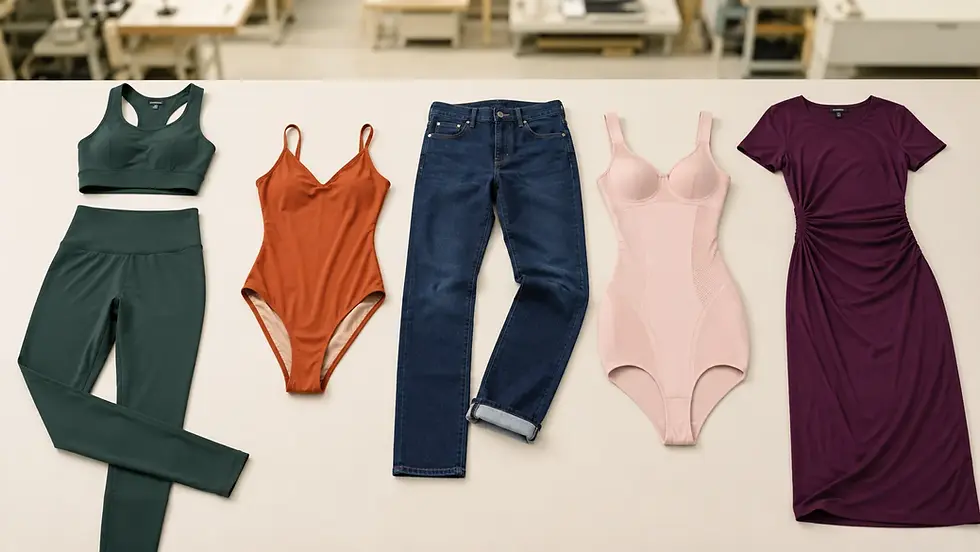
Spandex is used across many clothing categories because different garments benefit from controlled stretch.
Here are some common apparel categories that utilize spandex material:
Activewear and Athleisure
Activewear relies heavily on stretch because garments need to support repeated movement without feeling restrictive or losing their shape. Leggings, sports bras, gym tops, bike shorts, and workout sets often use polyester-spandex or nylon-spandex blends for flexibility, recovery, and a close fit.
For these products, stretch alone is not enough. The fabric should also provide suitable compression, strong seam performance, and enough recovery to prevent sagging at the knees, waist, or seat.
Brands should test the fabric while it is being worn and stretched, especially for leggings and fitted bottoms. A material that looks opaque when relaxed may become transparent during squats, bending, or other movement.
Swimwear
Swimwear fabrics need to stretch comfortably around the body while maintaining a secure fit in and out of the water. Nylon-spandex is often selected for its smooth, soft feel, while polyester-spandex may offer stronger resistance to chlorine and repeated exposure to pool environments.
Swimwear brands should evaluate:
Chlorine and saltwater resistance
Colorfastness in wet conditions
Fabric recovery after swimming
Drying time
Opacity when wet and stretched
These checks are important because a fabric may feel suitable during sampling but fade, loosen, or lose elasticity after repeated use.
Denim and Bottomwear
Spandex is commonly added to denim, chinos, trousers, women's skirts, and fitted pants to improve comfort when sitting, walking, and bending. Even a small amount can make a structured fabric feel noticeably more flexible.
However, stretch denim still needs enough stability to maintain the intended silhouette. Brands should consider the balance between comfort and structure. Skinny and slim-fit styles may need more flexibility, while straight-leg or rigid-inspired denim usually requires a firmer fabric with controlled stretch.
Fit testing should include sitting, walking, bending, and repeated wear rather than relying only on how the sample looks when first tried on.
Intimates and Shapewear
Bras, underwear, bodysuits, hosiery, and shapewear depend on spandex for close fit, support, and recovery. In these categories, the fabric must stretch enough to fit the body while also providing the right level of hold.
The fabric in this category should also be evaluated for:
Edge rolling
Waistband recovery
Comfort against the skin
Breathability
Seam stretch
Support after repeated washing
Using a highly elastic fabric does not automatically create effective shapewear. Pattern design, panel placement, fabric weight, and seam construction all contribute to the final level of support.
Dresses and Fashion Apparel
Spandex is frequently used in bodycon dresses, fitted skirts, jumper dresses, knit tops, and other close-fitting fashion pieces. It allows garments to follow the shape of the body while remaining easier to move in and more comfortable to wear.
The percentage of spandex should suit the intended silhouette. A soft draped dress may require only gentle stretch, while a fitted mini dress or jumpsuit may need stronger recovery and greater opacity.
Clothing brands should also check how the fabric behaves across different sizes. Stretch can improve fit flexibility, but it should not be used to compensate for poor grading or inaccurate garment measurements.
Limitations of Spandex Material
Spandex is useful, but it also has limitations.
High heat can affect elasticity, which is why pressing, drying, and finishing temperatures need to be controlled. Chlorine, sunlight, body oils, and repeated washing can also reduce performance over time, depending on the fiber and fabric construction.
Spandex blends can also be difficult to recycle. Separating elastane from cotton, polyester, and other fibers remains costly and technically challenging for many textile-recycling systems.
From a production perspective, highly elastic fabric may curl, shift, stretch, or distort during cutting and sewing. This requires the right patterns, equipment, needles, thread, seam construction, and operator experience.
What Should Brands Test Before Production?

A fabric can feel excellent in a swatch and still create problems once it is turned into a garment.
Before approving spandex fabric for bulk production, check:
Stretch percentage: How far does it extend in each direction?
Recovery: Does it return to its original measurements?
Opacity: Does the fabric become transparent when stretched?
Fabric weight: Is it suitable for the product and season?
Shrinkage: Does washing change the garment measurements?
Pilling: Does friction damage the surface?
Colorfastness: Does the color fade, bleed, or transfer?
Seam performance: Do stitches pop or restrict movement?
Wash durability: Does the fabric maintain its shape after repeated washing?
Special exposure: Will the garment come into contact with chlorine, sweat, heat, or sunlight?
Final Thoughts
Spandex plays an important role in modern apparel. It improves movement, comfort, fit, and shape retention across multiple apparel categories.
However, choosing the right spandex material involves more than checking the fiber percentage. The blend, construction, weight, stretch direction, recovery, opacity, and wash performance all need to support the intended product.
With the right fabric testing and manufacturing support, clothing brands can create stretch garments that fit comfortably, maintain their shape, and perform the way customers expect.


