
What Is Chiffon Fabric? Types, Uses, and Key Characteristics


Chiffon is known for its light, soft, and flowy look, which is why it is often used in dresses, blouses, skirts, and eveningwear.
But working with chiffon is not always easy. The fabric can move during cutting, seams may show through the material, and the final color can look different depending on the lining, layers, or lighting. Printed chiffon can also appear different once it is made into a garment.
For clothing brands, this means choosing chiffon is not just about finding a fabric that looks good. The fabric also needs to suit the design, construction, and end use of the garment.
Before moving into production, you need to consider which type of chiffon works best,
This guide covers what chiffon fabric is, its main types and characteristics, where it works best, plus the manufacturing details brands should understand before using it in a collection.
Let's get started.
What Is Chiffon Fabric?
Chiffon is a lightweight, sheer textile traditionally made from plain-woven, highly twisted yarns.
The yarn twist gives the fabric its slightly grainy, crepe-like surface, while the relatively open construction allows light to pass through. That combination creates the floating appearance associated with chiffon dresses, blouses, scarves, and layered skirts.
If you're asking what chiffon is made of, the answer can include:
Silk
Nylon
Rayon or viscose
Fiber blends
Supplier terms such as cloth chiffon or chiffon textile fabric still don't tell you the actual composition. Always check the fiber specification.
What Does Chiffon Look Like and Feel Like?
Chiffon usually looks translucent, light, and slightly textured rather than perfectly smooth.
Silk chiffon fabric usually has a soft, refined feel with excellent movement. It is often chosen for luxury eveningwear, bridal pieces, scarves, and delicate blouses, although its price and care requirements are higher.
Polyester chiffon can imitate much of that fluidity at a lower price, with easier care and useful heat-setting properties. Yet quality varies widely; some versions are beautifully soft, while others feel dry, stiff, or overly synthetic.
So, what is chiffon material like in practice? That depends almost as much on fiber, yarn, weight, and finishing as on the chiffon construction itself.
[Also Read: Everything You Need To Know About the Silk Fabric]
Main Types of Chiffon Used in Apparel

Silk Chiffon
Silk chiffon sits at the premium end of the category. It is exceptionally light and has a fluid drape that works well for high-end dresses, scarves, etc. The tradeoff is handling. It needs careful cutting, sewing, pressing, and care.
Polyester Chiffon
This is the most practical choice for many commercial fashion collections. Polyester chiffon is widely available, comparatively affordable, colorfast when processed correctly, and suitable for printing and heat-set pleating.
Viscose Chiffon
Viscose adds softness and fluid movement, though dimensional stability needs attention. Always test fabric shrinkage and post-wash behavior before entering production; a pre-laundering drape does not guarantee that garment length will remain the same
Nylon Chiffon
Nylon chiffon is lightweight and relatively strong for its weight. It is less common in everyday fashion than polyester chiffon but appears in specialty apparel, costumes, lingerie, and decorative applications.
Chiffon, Georgette, or Organza?
These three fabrics are regularly confused.
Chiffon is sheer and fluid. It falls close to the body and works particularly well where designers want softness and movement
Georgette is usually slightly heavier with a more noticeable crepe texture. It offers flow but tends to have a little more body.
Organza moves in the opposite direction. Although sheer, it is crisp and holds volume, making it far better for sculptural sleeves, structured skirts, overlays, and dramatic silhouettes.
Substituting one for another during development can completely change the garment.
Match the Chiffon to the Silhouette
This is where fabric selection becomes a manufacturing decision rather than a visual one.
A lightweight chiffon works beautifully for tiered skirts because several layers can create volume without excessive weight. The same fabric may be frustrating in a sharply tailored garment where clean structure is required.
For apparel brands, chiffon works particularly well in:
Dresses: Wrap dresses, gathered maxis, bias-inspired silhouettes, overlays, and occasionwear make good use of its movement.
Blouses: Chiffon works around soft gathers, neck ties, balloon sleeves, ruffles, and translucent panels.
Skirts: Layered, pleated, tiered, and flowing skirts suit the fabric well, although lining and waistband construction need planning.
Sleeves and overlays: Brands can use chiffon selectively rather than constructing an entire garment from it. Transparent sleeves over an opaque body are a straightforward example
Scarves and detachable details: Low weight allows long panels, ties, bows, cape sections, and scarf details to move freely.
Lining Chiffon Requires More Thought Than Adding Coverage
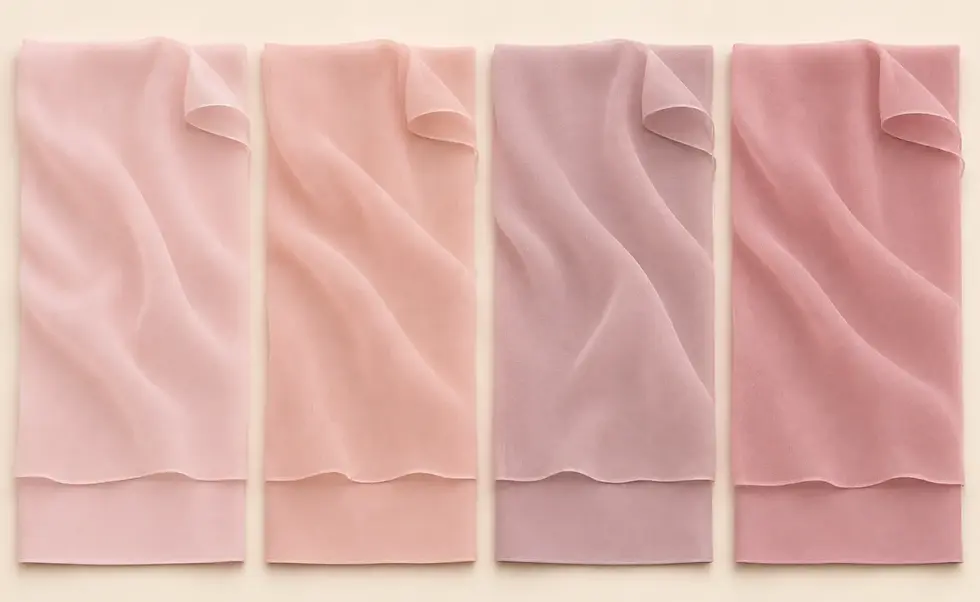
A lining doesn't just solve transparency. It changes the color, movement, weight, and overall impression of the garment.
Place pastel chiffon over white, and the color may appear brighter. Put the same fabric over nude, gray, or a tonal lining, and you can get a noticeably different result. A contrast underlayer can become part of the design itself.
Check the two fabrics together before approval.
The lining should also move with the shell. Pairing very fluid chiffon with a stiff lining can restrict the outer fabric and change the silhouette, whereas an excessively slippery lining can create its own construction issues.
For gathered or layered garments, full lining isn't always necessary. Strategic opacity panels, slips, double layers, or partial lining may give the designer more control.
Transparency Also Changes How Chiffon Prints
A study of double-sided digital printing on chiffon found that the fabric's thin, highly permeable structure caused colors from opposite sides to influence the final perceived color. Lightness and chroma affected how accurately the intended colors appeared.
The practical advice is simple:
Never approve an important chiffon print only from a digital artwork file.
Sample it on the actual fabric. Then view it against the intended lining, against skin where relevant, and under more than one lighting condition. If the design uses overlapping chiffon panels, check those overlaps too.
For a sheer fabric, the surface underneath becomes part of the color equation.
Cutting and Sewing Chiffon Is Where Quality Shows

Chiffon moves easily on the cutting table. If layers shift or the grain is distorted, panels that appear correct when flat can hang unevenly once sewn.
Accurate fabric preparation matters.
During sewing, lightweight and smooth fabrics are also more sensitive to needle movement, fabric feeding, presser-foot settings, and thread tension. Research into sewing thin fabrics has shown that low rigidity and smooth surfaces can contribute to fabric slippage, unbalanced stitching, and seam puckering when machine settings are poorly matched.
For chiffon garments, manufacturers need to pay attention to:
Fine needles appropriate to the fabric
Thread size and tension
Controlled fabric feeding
Seam puckering
Seam slippage
Fraying
Narrow hem consistency
Grain direction
French seams or other clean enclosed seams can make sense for certain chiffon styles because raw seam allowances would otherwise remain visible. Fine rolled hems are commonly used around delicate edges.
No single seam works for every chiffon. Sample first.
Watch the Hem Before Approving the Pattern
Long chiffon dresses and skirts can look uneven after hanging.
Why?
Areas cut closer to the bias can stretch differently from areas following the straight grain. The fabric's own weight may exaggerate that movement, especially in full skirts or circular constructions.
For designs that are sensitive to this problem, the unfinished garment may need time to relax before final hemming.
This sounds like a small production detail. On a floor-length chiffon dress, it can be the difference between a clean hemline and one that visibly rises and falls around the body.
Pleated Chiffon Needs Its Own Testing
Permanent pleating is another area where fiber matters.
Polyester is thermoplastic, making polyester chiffon especially useful for heat-set pleats. Research examining heat-set pleated fabrics has also shown that pleat configuration and thermal processing can affect characteristics such as drape, air permeability, and dimensional behavior.
Don't approve the unpleated fabric and assume the finished pleated version will perform identically.
Test the material after pleating and laundering.
Why Designers Are Still Using Chiffon
Sheer fashion hasn't disappeared; its use has become more layered and adaptable.
Recent runway coverage has continued to highlight chiffon, organza, and other transparent fabrics in layered dresses and soft silhouettes. Spring 2025 collections leaned heavily into sheer “soft power” dressing.
Spring 2026 collections continued using chiffon through translucent skirts, lingerie references, and layered lightweight looks. Fall/Winter 2026 also brought chiffon into softer romantic dressing rather than restricting it to summer.
For commercial brands, the opportunity isn't limited to a completely sheer dress. More wearable applications include chiffon sleeves, overlays, tonal layers, translucent skirts over shorter linings, scarf details, printed panels, and chiffon mixed with tailoring or knitwear.
What Should Brands Check Before Bulk Production?
Before approving chiffon, review the finished garment—not just the swatch.
Check:
Fiber content and fabric weight
Transparency with the intended lining
Drape after construction
Shrinkage
Colorfastness
Print accuracy
Seam puckering and slippage
Snagging
Hem stability
Pleat retention where applicable
Appearance after laundering
Light fabrics can create expensive problems precisely because they look simple.
Working With a Manufacturer on Chiffon Apparel
Chiffon requires coordination between fabric sourcing, patternmaking, cutting, sampling, and sewing.
At Lydia Design Studio, we help clothing brands match fabric to the intended silhouette, develop patterns around actual material behavior, test samples, refine construction, and prepare designs for small-batch production.
For chiffon, those early decisions matter. A good sample should answer the questions about transparency, lining, drape, seams, and finishing before bulk fabric reaches the cutting table.
Final Thoughts
Chiffon's value isn't simply that it is sheer. Its real design potential comes from the way it handles light, color, movement, layering, printing, and volume. Those same qualities also make production less forgiving.
Choose the fiber and weight around the garment, test transparency with the real lining, review prints on the actual cloth, and sample construction before committing to production.
That's when chiffon starts working for the design rather than creating problems around it.


